Search This Blog

Monday, March 20, 2017

Objective nasal cycle measurement without use of instrumentation

"Airflow through the nasal passages is normally asymmetrical because of alternating changes in nasal resistance in each nostril. The mechanism involves changes in sympathetic tone to the venous erectile tissue of the nasal mucosa; increased sympathetic vasoconstriction causing resistance to fall. The total nasal resistance to airflow remains fairly constant as changes between the nasal passages tend to be reciprocal so that the patient is usually unaware of the phenomenon.....The reason for its existence is uncertain. A simple explanation is that it permits one side of the nose to go through a rest period and recover from the minor trauma of conditioning the inspired air."

For this exercise you'll need to carry around with you a small, clean mirror. You're going to hold the mirror underneath your two nostrils, so that it's just touching your upper lip. Leave it there as you normally inhale and exhale a few times -- don't change your pattern of breathing (see the figure on the left below). This will produce two "clouds" of condensation on the mirror, one associated with each nostril (see the figure on the right below). Judge which "cloud" is larger, left or right, and record that judgment along with the time of day you made it. Sometimes the judgment will be very easy (the differences will be obvious), but other times the differences may be subtle. Also, because the "borders" of the condensation cloud taper off gradually, you're going to have to adopt some criterion for what constitutes "the edges" of each cloud and you'll need to apply that criterion each and every time you make judgments.

Repeat this exercise every 20 minutes during a 12-hour period, so that you'll accumulate a total of 36 pairs of measurements. If it is impossible to make judgments at the appropriate time then do so as soon as possible after that and make a note when that judgment was made. After you've collected your data, plot the results in the form of a graph: time will be plotted along the horizontal axis and "larger nostril" will be plotted along the vertical axis (see example graph below). If you're like 80% of people, the graph will fluctuate over time (meaning that when one patch of condensation is small the other will be large, and vice versa). From this graph you should be able to extract your nasal cycle: this is the duration of time it takes for you to go through one complete cycle of diameter change.


Monday, February 6, 2017

The Immune System and Sleep

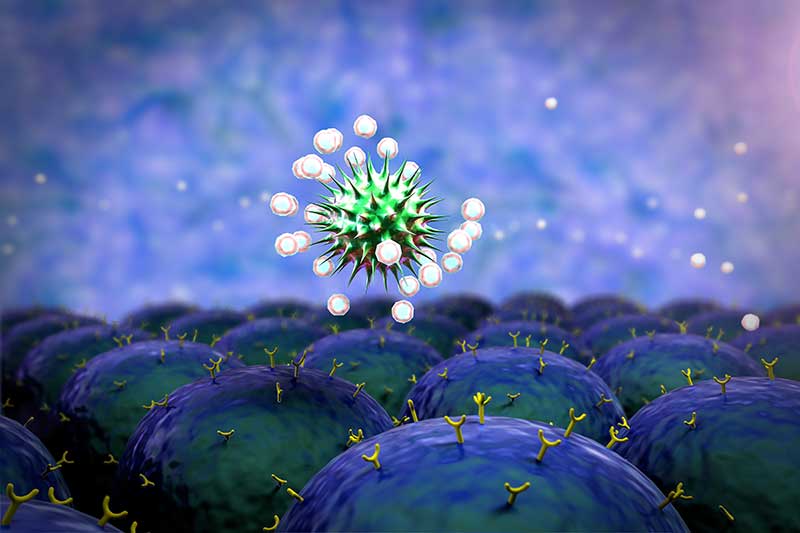
Are you suffering from a cold? According to a new study on the immune system and sleep, getting enough rest may be crucial to fighting off illness this winter.
B cells and T cells and antigens—oh my! We know a great deal about how our immune systems work, which has led to exciting and life-saving discoveries such as vaccinations and antimicrobial medications. However, there are still huge gaps in scientific knowledge of immunity, especially in the area of how it is affected by lifestyle. Most people intuitively know that eating an unhealthy diet or exhausting ourselves will leave us more prone to illness. While our knowledge in this area is hardly complete, recent studies have made interesting conclusions about the complexities of the immune system and sleep.

The Mystery of the Missing T Cells

Not Getting Enough Sleep? Your Immune System Could be Suffering 1What happens to your immune system when you sleep? Researchers drew blood from healthy volunteers after a solid night of sleep and after a night of wakefulness. The results were surprising: Those who had slept well had lower numbers of T cells in their bloodstream. On the other hand, those that had been awake had much higher numbers of all kinds of T cells.
Where did the missing T cells go? Based on prior studies of sleep and the immune system, researchers believe that they may have migrated to the lymph nodes, which is where T cells are “reset” and programmed to face new challenges. However, this is still merely a hypothesis. While this was a relatively small study, it raises new questions about the relationship between our immune system and sleep. We know that people who get regular sleep have stronger immune systems, but researchers are not entirely sure why.

The Immune System and Sleep: New Links

This study adds to a growing body of scientific knowledge about sleep and the immune system. Prior studies have found that getting enough sleep leads to higher levels of memory T cells, which are the cells responsible for recognizing and eliminating illnesses we have encountered before.
While this may seem to conflict with the recent study mentioned above, keep in mind that immune function fluctuates widely over the course of a day. The volunteers in the aforementioned study were tested early in the morning when, theoretically, immune cells are generally resetting for the day. This study looked at overall T cell levels throughout the day. As in all areas of human health, timing is important to immune function.

Excessive Sleepiness and Antibiotics

Understanding more about the immune system and sleep may help to reduce the usage of antibiotics and other antimicrobial drugs, reducing the rates of resistance. According to one recent study, a disorder called Excessive Daytime Sleepiness, or EDS, can lead to altered immune function. In fact, people with this disorder, which physiologically resembles constant sleep deprivation, are more likely to be infected with pathogenic microorganisms and more likely to require medication to clear these infections. People who are chronically fatigued have immune cells that are as sluggish as the rest of their sleep-deprived bodies, leading to increased infections and a lower chance of clearing these infections themselves.

Sleep: Better than Chicken Soup?

Not Getting Enough Sleep? Your Immune System Could be Suffering 2How much more likely are you to get sick if you are not getting enough rest? Research indicates that the sleep deprived are four times as likely to become ill from an infection they are exposed to than people who have adequate sleep. This can add up to a lot more time spent in bed with winter flus and summer colds. While many people cut back on sleep to keep up with the demands of their lives, this actually leads to lost productivity in the form of more sick days. Sleep appears to be just what the doctor ordered—although you certainly can still enjoy a bowl of chicken soup.
If you are trying to lead a healthy life, getting enough sleep is crucial. There are a variety of natural remedies available to people who cannot get the shut-eye they need, such as melatonin and light therapy. Sleepless nights may be more than an inconvenience, but a very real threat to your health as well.
https://www.chronobiology.com/getting-enough-sleep-immune-system-suffering/

Sunday, January 8, 2017

Second batch has started on 15th December, Registration is extended till 15th January

Due to academic calender 15th December deadline was not convenient for many students. Hence new registrations are allowed till 15th Jan 2017. 

Late students have to make up for earlier lectures as the batch was started as per scheduled on 15th Dec 2016.

The details of the registration can be found in earlier post.

Thursday, December 1, 2016

Registration open for second batch of project work for UG & PG life science students

Final year project work for UG & PG life science students
                                                           @
Biological Rhythm Research Laboratory
(जैविक लयबद्धता संशोधन प्रयोगशाळा)
Affiliated to Cochlea Pune for Hearing and Speech
An NGO for deafness diagnosis & counseling
161A Modibaug, Ganeshkhind road, Pune 411016

What is Chronobiology?
Chronobiology is a multidisciplinary branch of science dealing with study of biological rhythms.The free-running biological rhythms reflect the endogenous mechanisms of cyclic temporization whose expression is morphologically seen as an internal clock called body clock.

Biological rhythms
Three types of biological rhythms found in human being namely ultradian, circadian and infradian.
Circadian rhythms relates to any biological cyclic variations with a frequency of 1 cycle in 24±4 hrs such as sleeping, feeding patterns in human being and other animals.
Infradian rhythms relates to certain biological rhythms with frequency lower than circadian rhythms such as annual migration or reproductive cycles. 
Ultradian rhythms exhibit frequency higher than that of circadian rhythms. Examples of such rhythms include hormone release, heart rate, thermoregulation, urination, bowel activity, appetiteand nasal cycle.

Genetics of biological rhythms
Biological periodicities are driven by genetic factors which causes a recursivity in a spectrum of frequencies ranging from milliseconds to years. There are at least nine clock genes that play key role in the mammalian body clock.  The temporal effect of genetic programming on genome is known as chronome. A branch of chronobiology dealing with chronome analysis is called chronomics.

Chronobiometry
Chronobiology can either be studied by use of model systems (e.g. Drosophila, Mouse, and Bat) or by means of Autorhythmometry (AR). AR is nothing but self-measurement of the biological rhythms by the subject himself. Adoption of AR, would permit the assessment of the normal situation or condition of its health for each individual. Chronobiological data can be analyzed either by inferential chronobiometry or by non-inferential chronobiometry.
Chronobiological analysis may provide us to approach risk, diagnosis and treatment dependent on dynamics of time, gender, age, ethnicity and geographical location of the patient.

Chronoptherapy
Chronobiological approach of disease diagnosis and management has a lot of untapped potential.

We need sufficient clinical data to validate this hypothesis.  Ultradian rhythms are not studied so far in details even though many vital processes are known to be ultradian in rhythmicity. We will measure and analyse nasal cycle pattern using rhinomanometry and spirometry.  Modern science is aware about nasal cycle since over a century (Kayser 1895) but without any physiological relevance associated to this unique phenomenon.

Project details
Online registration at: chronomics.blogspot.in
Batch I –   15th July 2016 – 30th Nov 2016
Batch II – 15th Dec 2016 – 30th Apr 2017

Online seminars – two lectures/week during semester 
Project work – Four weeks during semester break 
Facilities: 1) Instrumentation - a) Rhinomanometer 
b) Spirometer c) Thermistor based Breathing Sensor    
2) Software for statistical analysis of rhythmic data   
3) Work experience in clinical settings 

Course content (2C / 30 lectures)
Chronobiology (15),   Autorhythmometry (5),
Rhinomanometry (5),   Biological rhythm as diagnostic tool (5)
Literature
Weekly PPTs, Research articles, Reference book: Chronobiology – Biological timekeeping; Edited by Dunlap, Loros, & DeCoursey Published by Sinauer. 

Fees*
Rs. 3000/-
*Applicable to only those students who clears theory exam and wish to participate in autorhythmometric data collection and analysis.

Outcome
ü  Understanding the dimension of time in biological systems
ü  Hands-on statistical analysis of biological rhythmic data
ü  Certificate of completion from BRRL

Terms and Conditions

        Project work in Chronobiology is primarily for final year under-graduate and post-graduate students.      Those who have completed the graduation or post graduation in life sciences are also eligible.

Project work is comprised of 2 credit theory work of 30 lectures. Successful completion of theory work is prerequisite for proceeding for 4 weeks of autorhythmometric work at Biological Rhythm Research Laboratory.

The credits earned during this work cannot be included in any university degree as the syllabus is not yet approved by any university.

A registration fee for the project work is Rs. 3000-00 which includes course material, autorhythmometry and data analysis software.

If a student failed to clear theory course then Rs. 2500-00 will be refunded. (Rs. 500-00 will be deducted as processing charges)

Registration by filling out the form at link: http://goo.gl/forms/rHi8gypfxGyzQ03C2
  

Registration is complete when fees are deposited

      Bank details
      Janata Sahakari Bank, Karve road A/C No: 007220100040914           
      Janata Sahakari Bank, Karve road IFSC code: JSBP0000007
      Janata Sahakari Bank, Karve road MICR code: 411074005

Registration for batch I – 8th July – 15th July
      Registration for batch II – 8th Dec – 15th Dec


Project coordinator
Prashant S. Duraphe, PhD (University of Würzburg, Germany)
Contact details: 8888810554/02025519099, duraphe@gmail.com

Tuesday, November 15, 2016

Reduction of Oxygen for a Short Duration May Reset Circadian Rhythm

Reducing oxygen is generally considered bad for the health. However, new research suggests that doing so for a short period of time may reset one’s circadian rhythm.
Most people have suffered from jet lag at some point in their lives. The cause of jet lag is simple: A disruption of the circadian rhythm. Curing jet lag is much more complex, often requiring days of slowly adjusting to a new sleep/wake cycle. However, new research in the field of chronobiology suggests that reducing oxygen for just a short period of time may reset the circadian rhythm and quickly cure jet lag as well as other circadian sleep disorders.

When Mice Get Jet Lag

While mice do not generally fly across time zones, they indeed can suffer from jet lag. Just as in humans, they can have changes in their environment like daylight savings time and the changing schedules of human caregivers. Like humans, the metabolism of mice, including how much oxygen they use, varies predictably over a 24-hour day.
The symptoms that jet-lagged mice get will sound familiar to any human who has had the disorder: fatigue, lower cognitive function and difficulty sleeping. However, when mice are given lower levels of oxygen in their air for a short period of time just before a large disruption to their circadian rhythm, they appear to adapt almost immediately with none of the side effects common to jet lag.

HIF1α and a Cell’s Oxygen Needs

Researchers quickly determined that HIF1α is the protein responsible for this response to low-oxygen environments. HIF1α is a protein that tells cells how to use oxygen and even how much to use. It also appears to be involved in a variety of other cell processes, many of which are oxygen-dependent. Mice that had the gene for this protein disabled did not respond to changes in oxygen levels with a reset circadian rhythm as fully-functional mice did.

Could Low Oxygen Levels Reset 

Circadian Rhythm in Humans?

Human lives are generally more complex than those of mice. We have a variety of circadian rhythm complaints, from jet lag to the problems of shift work. A disrupted circadian rhythm has been linked to diseases ranging from type 2 diabetes to heart disease. In addition, jet lag can cause discomfort as people must spend days adjusting to changes similar to adjusting to changes in work schedule and even daylight savings time.
Because people also have this protein, this may have huge implications for human health. People may be able to strap on a face mask and breath low oxygen air for just a few minutes, not long enough to cause health problems, and thus reset their circadian rhythm
Ref: https://www.chronobiology.com/reduction-oxygen-short-duration-may-reset-circadian-rhythm/

Tuesday, October 18, 2016

The worldwide experimental platform (WeP)

What is the WeP?

Biological research is - above all - for understanding how we (humans) live, stay healthy, or become ill and are healed. Usually, this involves highly controlled laboratory experiments, under artificial conditions, and using non-human subjects. We, therefore, know quite a bit about the functioning of our body but there are remarkably many ''black boxes'' remaining concerning the human species and its biology. 


One approach to correct this deficit is field research that describes and characterises human behaviour on a large scale. Despite the perception that human individuality resists characterisation, most behaviours will show a normal distribution amongst a population. Indeed, based on our decade-long experiment in studying human behaviour on the level of populations, we believe that humans - in real life - make excellent subjects for scientific studies. Perhaps the key is simply to ask the right questions in order to understand typical human behaviours. 

The WeP seeks to extend our insights concerning all aspects of human behaviour in the real world. WeP is an acronym for ''Worldwide experimental Platform'', a tool that takes research on human behaviour to the digital age, extending around the globe and into different cultures. The first stage projects on the WeP will use internet-based questionnaires to document typical, human behaviour. 

What does theWeP study? 

Field research is one of the most important tools for learning more about behaviour, physiology and genetics of plants and animals. theWeP draws on this principle to widen research into the biology of humans. The results from WeP-studies will deliver important insights for all aspects of our life, leading eventually to a better understanding of healthy lifestyles and optimal quality of life, and therefore ways to avoid illness. Surprisingly, we still know relatively little about the basic requirements that we need as biological beings, to healthy living. How much light do we need, how much movement and exercise, how much to eat? Do our needs change through the day, season or lifetime, and will this be different if one lives near the equator or towards the poles? How dependent is our behaviour, our physiology and the development of illness on where and how we live? What do humans need so that they can be as happy with their work as with their free time? These are just a small collection from many open questions for which theWeP is seeking answers. 

The WeP-Strategy

Our limited knowledge concerning the biology of humans is mostly due to the fact that most studies can research only small numbers of people. But even if hundreds or thousands of Germans, Japanese or Americans were studied, the results would still only reflect region-specific human behaviour. In addition, many studies from different parts of the world are not readily comparable due to differences in methods. The goal of theWeP planners is that each of the questions on the various WeP-projects will be answered by thousands of people across every land and culture. By standardising methods, comparisons between studies will be possible. 

All WeP projects depend purely on voluntary respondents. Each of these participants receives a personalized response, indicating how they compare with the general population world wide. Through this feedback system, people all around the world stand to learn more about the behaviour and physiology of man. 

The strategy of theWeP has several levels. The first level uses internet-supported questionnaires trying to reach as many people from as many regions as possible. At another level of theWeP, one has the opportunity to record daily behaviour in a secure, electronic diary. Finally, some subjects may have the possibility to directly measure behavioural parameters by wearing small non-invasive devices to record activity, for example, for a couple of weeks. 

The WeP promise 

With the WeP, we will create a understanding of human behaviour and physiology in general and NOT a ''transparent individual''. All results from individuals are held in the strictest of confidence. Only the results of the general population will be published/revealed, and only after applications of the strictest of scientific analysis. No details that you provide as a volunteer will be revealed to third parties, nor can they be associated in any way with you personally. At no point will theWeP database be shared with third parties, except for academic researchers who will have access to anonymous data following an application procedure whereby their scientific question is laid out. Scientists working with public academic institutions can initiate their own project using the theWeP's infrastructure. theWeP has no commercial motivation or interests, serving exclusively basic research. WeP-projects must be approved by ethics commissions and a dedicated unit of theWeP serves to guarantee security of the data. Without a strong investment into the trust of those who provide information for the project, theWeP would have no chance to live. 


theWeP initiators 

Ludwig-Maximilian-University München, D (WeP Coordinator) 

University of Groningen, NL 

Oxford University, UK 

University of the Philippines, Diliman 


Reference: http://www.bioinfo.mpg.de/thewep/

Sunday, September 11, 2016

Melatonin and Chronobiology

Melatonin, also known as the “mother hormone of chronobiology,” is a hormone made in the pineal gland. This process is due to cues from the suprachiasmatic nucleus of the hypothalamus, which regulates the circadian rhythm. When the retinas stop sensing as much blue wavelength light, the suprachiasmatic nucleus is informed and induces the pineal gland to begin making melatonin. When the retinas sense early morning, melatonin production is ceased and hormones associated with wakefulness are made instead. This cycle helps to create a circadian rhythm, or 24-hour sleep-wake cycle.
Melatonin has a very short half-life of about 30 minutes. Because it breaks down so quickly, it must be made continuously throughout the night in order to sustain restful sleep. In people with a healthy circadian rhythm, melatonin levels rise rapidly after dark and plateau throughout the night until early morning. These high levels are essential not just for falling asleep, but for sleeping deeply and restfully. Melatonin levels then drop sharply in the early morning to allow people to wake up in response to increasing light levels.
Chronic sleep disturbance in an average of three out of seven nights raises the likelihood of heart attack, stroke, diabetes, vascular disease and medically problematic obesity considerably.
For the older, pineal gland sufficient nighttime production of melatonin is no longer possible, even when the body is exposed to complete darkness. The pineal gland is heavily supplied with blood and like other areas with vessels, it is predestined to suffer from calcification. This leads to pronounced insomnia.
Research in chronobiology has shown that maintaining melatonin cycles is important not just to restful sleep but also to overall health.
Source: https://www.chronobiology.com/sleep-2/melatonin/